
Pipistrel TAURUS ELECTRO G2.5 accident near Hempstead, Texas, August 15, 2026
On August 15, 2026 at about 9:44 pm local time, a 2018 Pipistrel TAURUS ELECTRO G2.5 (glider), registered N984TP, was substantially damaged in an accident during enroute (descent) near Hempstead, Texas (Soaring Club of Houston airport). It was a personal flight under general aviation rules (Part 91). 1 person had minor injuries. The weather was visual conditions (good weather).
The NTSB's probable cause their words, unchanged
The pilot’s failure to properly stow the motor in preparation for approach and landing that resulted in a loss of airspeed and an inadvertent aerodynamic stall and spin.
Source: NTSB aviation accident database, copy made November 2, 2026. Docket and reports at the NTSB.
What the record shows
- Date
- August 15, 2026 · about 9:44 pm local time · cases in 2026
- Place
- Hempstead, Texas · Soaring Club of Houston · cases near this airport · map
- Type
- Accident
- Injuries
- 1 person had minor injuries.
- Weather
- visual conditions (good weather)
- Aircraft
- Pipistrel TAURUS ELECTRO G2.5, built 2018
- Registration
- N984TP · registry record · serial 167 T ET
- Damage
- Substantial damage
- Flight
- Personal flight · general aviation rules (Part 91)
The NTSB's narrative final · quoted from the NTSB record
The pilot of the electric motor glider stated that in preparation for decent and landing to the destination airport, he selected the system enable switch to off instead of selecting the motor mast position selector to down. The motor then windmilled, which resulted in the motor and mast losing power, and the glider quickly lost airspeed. The glider then entered an aerodynamic stall and spin. The pilot stated that in an attempt to recover from the spin, he pushed down on the control stick and applied rudder, but the glider pitched up violently. While in an unusual attitude and at a low altitude, the pilot was unable to regain control and deployed the ballistic parachute. During the deployment, the parachute rocket went through the right wing, but the parachute still deployed and the glider impacted terrain in an inverted attitude. The glider sustained substantial damage to the right wing. The pilot attributed the rapid loss of the glider’s airspeed due to the drag induced from the windmilling propeller and thought that the windmilling propeller also inhibited airflow over the vertical and horizontal stabilizer, which prevented recovery from the stall and spin. The pilot stated there was no mechanical malfunctions or failures with the glider that precluded normal operation.
The complete narrative as the NTSB published it. The NTSB's docket holds the report as a PDF and any photographs, statements and other documents from the investigation.
The factual record from the NTSB's investigation tables, in plain English
What happened, in order
- Loss of control in flight during enroute (descent) defining event
The NTSB's findings
- Personnel issues › Action/decision › Action › Incorrect action selection › Pilot
- Aircraft › Aircraft oper/perf/capability › Performance/control parameters › Angle of attack › Capability exceeded
- Aircraft › Aircraft oper/perf/capability › Performance/control parameters › Airspeed › Not attained/maintained
Pilot
- Certificate: airline transport pilot, flight instructor, commercial pilot
- Ratings: multi-engine land; single-engine land; instructor: airplane multi-engine; instructor: airplane single-engine; instructor: instrument airplane; instrument: airplane; rotorcraft: glider
- Flight time: 26,826 hours in all; 150 in this make and model; 39 in the last 90 days; 22 in the last 30 days; 14,426 as pilot in command; 876 on instruments
- Last flight review: September 19, 2025
- Medical certificate: Class 1 (with waivers/limitations)
- Seat: left
- Injury: minor injuries
The aircraft
- Airframe total time: 181.5 hours
- Last inspection: condition inspection, February 7, 2026
- Maximum gross weight: 1,212 lb
- Seats: 2
- Landing gear: retractable
- Engine: Pipstrel 40/30 (electric); 14 hours total
The flight
- Flight plan: none
Weather at the time
- Light: daylight
- Wind: from 190° at 9 knots
- Visibility: 10 statute miles
- Sky: clear
- Temperature: 100°F (38°C), dew point 73°F (23°C)
- Altimeter: 30.10 inHg
- Observation at 2:35 pm from 60R, 13 miles away
Injuries
| Fatal | Serious | Minor | None | |
|---|---|---|---|---|
| Flight crew | 1 |
Photographs from the investigation 2 pictures from the NTSB's docket, as the NTSB released them
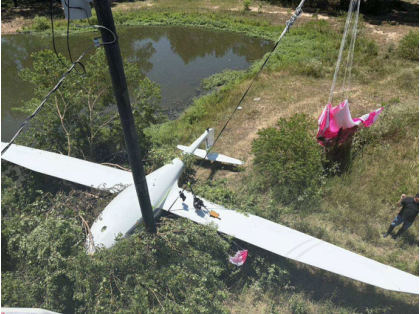
The NTSB's photographs with the NTSB's captions, at screen size. Open a picture to see it full size or to report one that should not be shown.
Documents from the investigation the NTSB's docket: the evidence folder behind the report
3 documents, released by the NTSB on October 1, 2026. View them here, or download them; the NTSB redacts some personal details before release, and this site shows the NTSB's own titles rather than its file names.
| # | Document | What it is | |
|---|---|---|---|
| 1 | Pilot/operator Aircraft Accident Report, NTSB Form 6120.1 | PDF, 10 pages | View Download |
| 2 | Memorandum for Record A�� Record of Conversation, Pilot | PDF, 2 pages | View Download |
| 3 | Photos | PDF, 3 pages · our copy | View Download |
The same docket at the NTSB · documents without a copy here are fetched from the NTSB when you open them.
Other NTSB records under N984TP the same tail number, which may have belonged to a different aircraft at the time
Connections how this case links to the rest of the register
- N984TP on the register today · the tail number may have moved to another aircraft since
- Pipistrel 400 aircraft on the register
- Engine: Pipstrel 40/30 · as the NTSB recorded it
- Soaring Club Of Houston · nearest airport
- Accidents and incidents in Texas 6,244 since 1982 · 1,061 in the last ten years
- Texas 29,985 aircraft registered
- Other NTSB records under N984TP 1 records · the number may have belonged to another aircraft at the time
The whole map of how records connect · these connections as data: /graph/accident/CEN26LA294.json.
The bigger picture in Aviation Analytics: accidents over time since 1982, by model, by phase of flight and conditions, by place and on the map.
Everything on this page comes from the NTSB's public records. The narrative, probable cause and findings are the NTSB's own words; the coded tables behind the report are written out in plain English, with pilots' ages, home towns and medical details left out. The documents and photographs are the NTSB's docket, shown as the NTSB released them. This site's own text does not name anyone involved, its policy at this time. A preliminary report can change; the final report usually follows one to two years later, and the page is refreshed when it does.