
Cub Crafters CARBON CUB accident near Ogallala, Nebraska, October 27, 2024
On October 27, 2024 at about 6:15 pm local time, a 2021 Cub Crafters CARBON CUB, an amateur-built aircraft,, registered N257ST, was destroyed in an accident during initial climb near Ogallala, Nebraska (Searle Fld airport). It was a personal flight under general aviation rules (Part 91). 1 person had minor injuries. The weather was visual conditions (good weather).
The NTSB's probable cause their words, unchanged
The improper installation of the elevator control cable hardware, which resulted in the separation of the elevator control cable and a loss of pitch control in flight.
Source: NTSB aviation accident database, copy made October 5, 2026. Docket and reports at the NTSB.
What the record shows
- Date
- October 27, 2024 · about 6:15 pm local time
- Place
- Ogallala, Nebraska · Searle Fld · map
- Type
- Accident
- Injuries
- 1 person had minor injuries.
- Weather
- visual conditions (good weather)
- Aircraft
- Cub Crafters CARBON CUB EX3, built 2021, amateur-built
- Registration
- N257ST · no longer on the register · serial CCK-2000-0059
- Damage
- Destroyed
- Flight
- Personal flight · general aviation rules (Part 91)
The NTSB's narrative final · quoted from the NTSB record
The pilot reported that he performed a flight control check before departing in his experimental, amateur-built airplane, and that the flight controls operated normally. During the initial climb, about 30 to 50 ft above ground level, the elevator control went slack. He could not regain elevator control and adjusted engine power in an attempt to regain control of the airplane’s pitch; however, the airplane descended and impacted the runway surface. The airplane skidded off the runway, the pilot egressed, and the airplane was destroyed by postimpact fire. A postaccident examination of the airplane found that the top elevator control cable was not attached to the elevator horn. The securing bolt, nut, and cotter pin were not located. The lower elevator control cable remained attached via its bolt, but the securing nut and cotter pin were not located. A review of maintenance information about the airplane revealed that the airplane was originally assembled about three years before the accident, and had undergone several condition inspections, including one by a mechanic who was different than the owner/builder. The most recent condition inspection was performed by the owner/builder about nine months before the accident, and would have included inspection of all flight control surfaces. There was no logbook record of any recent maintenance to the elevator, nor did the pilot recall any. Based on the available information, it is likely that the elevator control cable was improperly secured during maintenance; however, when the maintenance occurred could not be determined.
The complete narrative as the NTSB published it. The NTSB's docket holds the report as a PDF and any photographs, statements and other documents from the investigation.
The factual record from the NTSB's investigation tables, in plain English
What happened, in order
- Flight control sys malf/fail during initial climb defining event
- Collision with terrain or object (not controlled flight into terrain) during uncontrolled descent
The NTSB's findings
- Aircraft › Aircraft systems › Flight control system › Elevator control system › Related maintenance info
- Personnel issues › Task performance › Inspection › Scheduled/routine inspection › Owner/builder
- Personnel issues › Task performance › Maintenance › Installation › Owner/builder
Pilot
- Certificate: private
- Ratings: single-engine land; instrument: airplane
- Flight time: 360 hours in all; 30 in this make and model; 34 in the last 90 days; 13 in the last 30 days; 303 as pilot in command
- Last flight review: May 24, 2023
- Medical certificate: Class 3 (without waivers/limitations)
- Seat: frt
- Injury: no injuries
The aircraft
- Airframe total time: 226 hours
- Last inspection: condition inspection, January 1, 2024; 59 hours since
- Maximum gross weight: 2,000 lb
- Seats: 2
- Landing gear: fixed
- Engine: Carbon Cub CC363i (piston); 226 hours total
- Fire on the ground
The flight
- Destination: KAPA Englewood CO
- Flight plan: none
- Runway 26, 5,102 ft by 75 ft
Weather at the time
- Light: daylight
- Visibility: 10 statute miles
- Sky: clear
- Temperature: 63°F (17°C), dew point 34°F (1°C)
- Altimeter: 30.12 inHg
- Observation at 11:15 am from KOGA, 1 miles away
Weather report (METAR): KOGA 271715Z AUTO 00000KT 10SM CLR 17/01 A3012 RMK AO2 T01700012
Injuries
| Fatal | Serious | Minor | None | |
|---|---|---|---|---|
| Flight crew | 1 |
Photographs from the investigation 2 pictures from the NTSB's docket, as the NTSB released them
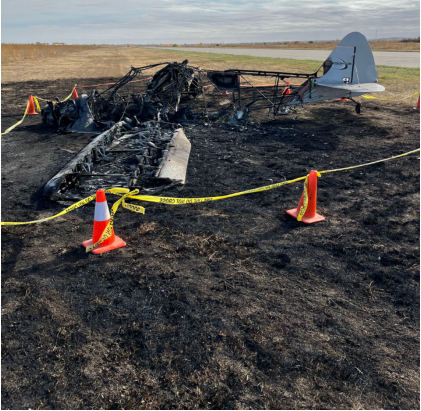
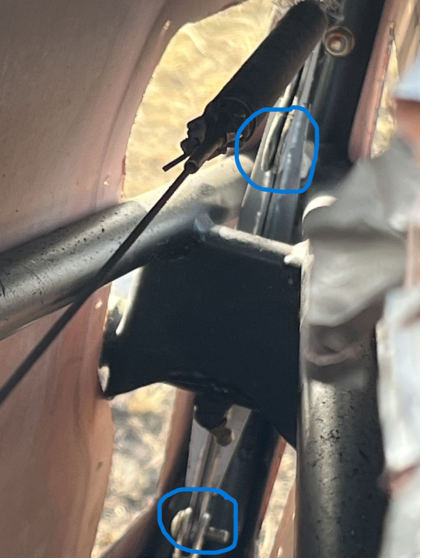
The NTSB's photographs with the NTSB's captions, at screen size. Open a picture to see it full size or to report one that should not be shown.
Documents from the investigation the NTSB's docket: the evidence folder behind the report
6 documents, released by the NTSB on April 1, 2025. View them here, or download them; the NTSB redacts some personal details before release, and this site shows the NTSB's own titles rather than its file names.
| # | Document | What it is | |
|---|---|---|---|
| 1 | Pilot/operator Aircraft Accident Report, NTSB Form 6120.1 | PDF, 10 pages | View Download |
| 2 | Investigative Photos | PDF, 3 pages · our copy | View Download |
| 3 | Maintenance Documents | PDF, 12 pages | View Download |
| 4 | Roc Pilot | PDF, 1 page | View Download |
| 5 | Roc FAA | PDF, 2 pages | View Download |
| 6 | Wreckage Release | PDF, 1 page | View Download |
The same docket at the NTSB · documents without a copy here are fetched from the NTSB when you open them.
Everything on this page comes from the NTSB's public records. The narrative, probable cause and findings are the NTSB's own words; the coded tables behind the report are written out in plain English, with pilots' ages, home towns and medical details left out. The documents and photographs are the NTSB's docket, shown as the NTSB released them. This site's own text never names anyone involved. A preliminary report can change; the final report usually follows one to two years later, and the page is refreshed when it does.