
Cessna 180K accident near Beloit, Kansas, March 27, 2026
On March 27, 2026 at about 5:55 pm local time, a 1979 Cessna 180K, registered N2785K, was substantially damaged in an accident during landing (flare/touchdown) near Beloit, Kansas (Moritz Meml airport). It was a personal flight under general aviation rules (Part 91). No one was hurt; 3 people were on board or involved. The weather was visual conditions (good weather).
The NTSB's probable cause their words, unchanged
The pilot’s failure to maintain directional control during the landing with a quartering headwind. Contributing to the accident was the pilot’s runway selection based on the variable and gusting wind conditions.
Source: NTSB aviation accident database, copy made October 5, 2026. Docket and reports at the NTSB.
What the record shows
- Date
- March 27, 2026 · about 5:55 pm local time
- Place
- Beloit, Kansas · Moritz Meml · map
- Type
- Accident
- Injuries
- No one was hurt; 3 people were on board or involved.
- Weather
- visual conditions (good weather)
- Aircraft
- Cessna 180K 180, built 1979 · all 180Ks on the register
- Registration
- N2785K · registry record · serial 18053067
- Damage
- Substantial damage
- Flight
- Personal flight · general aviation rules (Part 91)
The NTSB's narrative final · quoted from the NTSB record
The pilot of the tailwheel equipped airplane reported that the final approach was stable; however, the winds were gusting according to the automated wind report he received during the approach to the airport. The airplane touched down on the runway centerline, and when the airplane’s tail came down, the airplane immediately began a left turn and the right wing began to lift. The pilot attempted to correct with rudder and aileron inputs along with brakes; however, the left wing tip contacted the runway and the airplane exited the right side of the runway. The left main landing gear separated, and the airplane came to rest on the edge of the runway. The left wing and fuselage sustained substantial damage. The pilot reported that there were no preaccident mechanical failures or malfunctions with the airplane that would have precluded normal operation. At the time of the accident, the pilot was landing the airplane on runway 36 with variable winds from 030° to 040° at 18 knots and gusting to 23 knots. The pilot stated the accident could have been prevented if he would have chosen to use the turf runway that was oriented more directly into the wind.
The complete narrative as the NTSB published it. The NTSB's docket holds the report as a PDF and any photographs, statements and other documents from the investigation.
The factual record from the NTSB's investigation tables, in plain English
What happened, in order
- Runway excursion during landing (landing roll)
- Loss of control on ground during landing (flare/touchdown) defining event
- Landing gear collapse during landing (landing roll)
The NTSB's findings
- Aircraft › Aircraft oper/perf/capability › Performance/control parameters › Directional control › Not attained/maintained
- Environmental issues › Conditions/weather/phenomena › Wind › Crosswind › Effect on operation
- Environmental issues › Conditions/weather/phenomena › Wind › Gusts › Effect on operation
- Personnel issues › Task performance › Use of equip/info › Aircraft control › Pilot
- Personnel issues › Action/decision › Info processing/decision › Decision making/judgment › Pilot
Pilot
- Certificate: flight instructor, commercial pilot
- Ratings: single-engine land; instructor: airplane single-engine; instrument: airplane
- Flight time: 14,300 hours in all; 116 in this make and model; 20 in the last 90 days; 5 in the last 30 days; 14,200 as pilot in command; 275 on instruments
- Last flight review: April 18, 2025
- Medical certificate: Class 2 (waiver time limited special)
- Seat: left
- Injury: no injuries
Passenger
- Seat: rgt
- Injury: no injuries
Passenger
- Seat: rear
- Injury: no injuries
The aircraft
- Airframe total time: 2,420 hours
- Last inspection: annual inspection, March 11, 2026; 6 hours since
- Maximum gross weight: 3,190 lb
- Seats: 4
- Landing gear: fixed
- Engine: Continental Motors O-470-50 (piston); 6 hours total
- Operator: Pontiac Flying LLC
The flight
- Departed from: KPNT Pontiac IL at 2:00 pm
- Destination: K61 Beloit KS
- Flight plan: none
- Runway 36, 4,300 ft by 75 ft
Weather at the time
- Light: daylight
- Wind: from 020° at 18 knots, gusting 25
- Visibility: 10 statute miles
- Sky: clear
- Temperature: 46°F (8°C), dew point 25°F (-4°C)
- Altimeter: 30.65 inHg
- Observation at 12:00 pm from KCNK, 23 miles away
Weather report (METAR): METAR KCNK 271655Z AUTO 02018G25KT 10SM CLR 08/M04 A3065 RMK AO2 PK WND 04027/1616 SLP385 T00831044
Injuries
| Fatal | Serious | Minor | None | |
|---|---|---|---|---|
| Flight crew | 1 | |||
| Passengers | 2 |
Photographs from the investigation 2 pictures from the NTSB's docket, as the NTSB released them
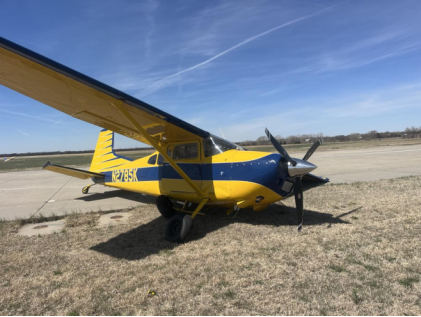
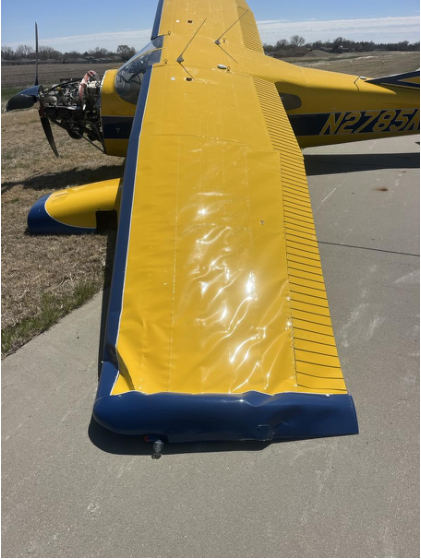
The NTSB's photographs with the NTSB's captions, at screen size. Open a picture to see it full size or to report one that should not be shown.
Documents from the investigation the NTSB's docket: the evidence folder behind the report
3 documents, released by the NTSB on April 30, 2026. View them here, or download them; the NTSB redacts some personal details before release, and this site shows the NTSB's own titles rather than its file names.
| # | Document | What it is | |
|---|---|---|---|
| 1 | Pilot/operator Aircraft Accident Report, NTSB Form 6120.1 | PDF, 10 pages | View Download |
| 2 | Photos | PDF, 3 pages · our copy | View Download |
| 3 | Maps or Charts of Accident Area | PDF, 1 page | View Download |
The same docket at the NTSB · documents without a copy here are fetched from the NTSB when you open them.
Other NTSB records under N2785K the same tail number, which may have belonged to a different aircraft at the time
Everything on this page comes from the NTSB's public records. The narrative, probable cause and findings are the NTSB's own words; the coded tables behind the report are written out in plain English, with pilots' ages, home towns and medical details left out. The documents and photographs are the NTSB's docket, shown as the NTSB released them. This site's own text never names anyone involved. A preliminary report can change; the final report usually follows one to two years later, and the page is refreshed when it does.