
Engineering & Research 415 accident near Sheboygan Falls, Wisconsin, November 13, 2025
On November 13, 2025 at about 2:35 am local time, a 1946 Engineering & Research 415, registered N94342, was substantially damaged in an accident during landing (flare/touchdown) near Sheboygan Falls, Wisconsin (Sheboygan County Meml Intl airport). It was an instructional flight under general aviation rules (Part 91). No one was hurt; 2 people were on board or involved. The weather was visual conditions (good weather).
The NTSB's probable cause their words, unchanged
The flight instructor’s failure to arrest the airplane’s descent rate during a takeoff simulated engine failure which resulted in a hard landing.
Source: NTSB aviation accident database, copy made October 5, 2026. Docket and reports at the NTSB.
What the record shows
- Date
- November 13, 2025 · about 2:35 am local time
- Place
- Sheboygan Falls, Wisconsin · Sheboygan County Meml Intl · map
- Type
- Accident
- Injuries
- No one was hurt; 2 people were on board or involved.
- Weather
- visual conditions (good weather)
- Aircraft
- Engineering & Research 415 C, built 1946 · all 415s on the register
- Registration
- N94342 · registry record · serial 1565
- Damage
- Substantial damage
- Flight
- Instructional flight · general aviation rules (Part 91)
The NTSB's narrative final · quoted from the NTSB record
The flight instructor reported that during the night instructional flight, they had just completed a touch and go landing when he announced a simulated engine failure after takeoff to the student. Having only accomplished simulated engine failures after takeoff during the day, the student was slow to use the attitude directional indicator (ADI) to command the appropriate pitch attitude, and the airspeed began to decay. The flight instructor immediately took the flight controls and attempted to establish a proper pitch attitude and added power to climb. The airspeed did not build quickly enough so he applied full power to attempt to recover from the maneuver. He reported that the engine initially hesitated, and he pulled “almost full up elevator” to establish a level attitude as the engine began to develop full power. However, the airplane’s rate of descent was not arrested prior to runway contact resulting in a hard landing. The flight instructor reported that there were no mechanical malfunctions or failures with the airplane that would have precluded normal operation. The flight instructor reported that the accident could have been avoided if he had familiarized the student with the ADI’s visual reference for best rate of climb and a power off landing attitude prior to the night flight, as well as, how to use the ADI’s during night flights. Additionally, trees and terrain west of the airplane’s approach point might have disturbed the approach winds. The instructor planned to factor that in during future approaches.
The complete narrative as the NTSB published it. The NTSB's docket holds the report as a PDF and any photographs, statements and other documents from the investigation.
The factual record from the NTSB's investigation tables, in plain English
What happened, in order
- Simulated/training event during takeoff
- Hard landing during landing (flare/touchdown) defining event
The NTSB's findings
- Aircraft › Aircraft oper/perf/capability › Performance/control parameters › Descent rate › Related operating info
Pilot
- Certificate: airline transport pilot, flight instructor, commercial pilot
- Ratings: multi-engine land; single-engine land; instructor: airplane multi-engine; instructor: airplane single-engine; instructor: instrument airplane; instrument: airplane; instrument: helicopter; rotorcraft: helicopter
- Flight time: 20,532 hours in all; 500 in this make and model; 52 in the last 90 days; 16 in the last 30 days; 18,550 as pilot in command; 1,951 on instruments
- Last flight review: August 16, 2024
- Medical certificate: BasicMed
- Seat: rgt
- Injury: no injuries
Dual student
- Certificate: student
- Flight time: 47 hours in all; 47 in this make and model; 36 in the last 90 days; 7 in the last 30 days; 14 as pilot in command
- Medical certificate: Class 1 (without waivers/limitations)
- Seat: left
- Injury: no injuries
The aircraft
- Airframe total time: 3,321.4 hours
- Last inspection: annual inspection, August 20, 2025; 24 hours since
- Maximum gross weight: 1,260 lb
- Seats: 2
- Landing gear: fixed
- Engine: Continental C85-12F (piston); 2,087 hours total
The flight
- Flight plan: none
- Runway 22, 6,801 ft by 100 ft
- A second pilot was aboard
Weather at the time
- Light: night
- Wind: from 280° at 7 knots
- Visibility: 10 statute miles
- Sky: clear
- Temperature: 41°F (5°C), dew point 25°F (-4°C)
- Altimeter: 29.95 inHg
- Observation at 7:53 pm from KSBM
Weather report (METAR): METAR KSBM 130153Z AUTO 28007KT 10SM CLR 05/M04 A2995 RMK AO2 SLP146 T00501044
Injuries
| Fatal | Serious | Minor | None | |
|---|---|---|---|---|
| Flight crew | 2 |
Photographs from the investigation 2 pictures from the NTSB's docket, as the NTSB released them
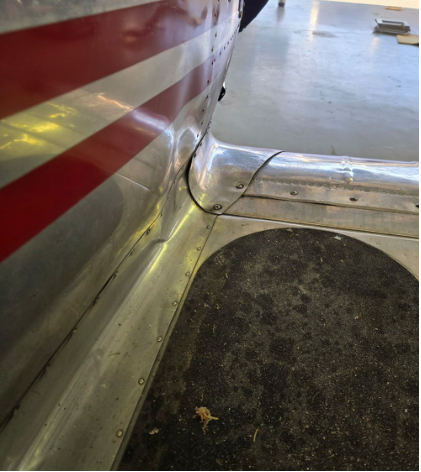
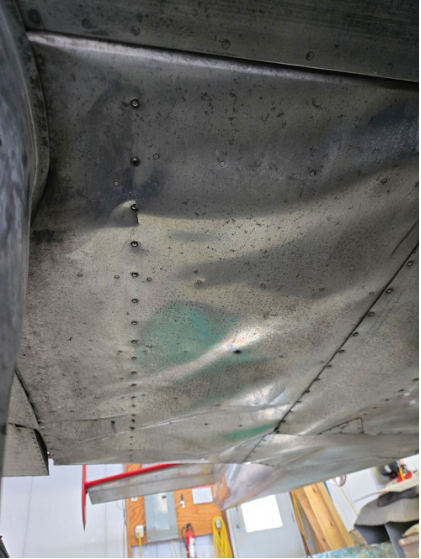
The NTSB's photographs with the NTSB's captions, at screen size. Open a picture to see it full size or to report one that should not be shown.
Documents from the investigation the NTSB's docket: the evidence folder behind the report
2 documents, released by the NTSB on January 9, 2026. View them here, or download them; the NTSB redacts some personal details before release, and this site shows the NTSB's own titles rather than its file names.
| # | Document | What it is | |
|---|---|---|---|
| 1 | Pilot/operator Aircraft Accident Report, NTSB Form 6120.1 | PDF, 10 pages | View Download |
| 2 | Photos | PDF, 3 pages · our copy | View Download |
The same docket at the NTSB · documents without a copy here are fetched from the NTSB when you open them.
Everything on this page comes from the NTSB's public records. The narrative, probable cause and findings are the NTSB's own words; the coded tables behind the report are written out in plain English, with pilots' ages, home towns and medical details left out. The documents and photographs are the NTSB's docket, shown as the NTSB released them. This site's own text never names anyone involved. A preliminary report can change; the final report usually follows one to two years later, and the page is refreshed when it does.